Plan the cut before the sheet
Use test cuts and material notes before committing premium cardstock, vinyl, sticker paper, or iron-on to a full batch.
A personalized gift can be thoughtful and still create waste if the project is planned poorly. Cricut sustainability on this site means choosing the right material for the job, testing before cutting a full batch, using scraps deliberately, and packaging finished pieces with restraint.
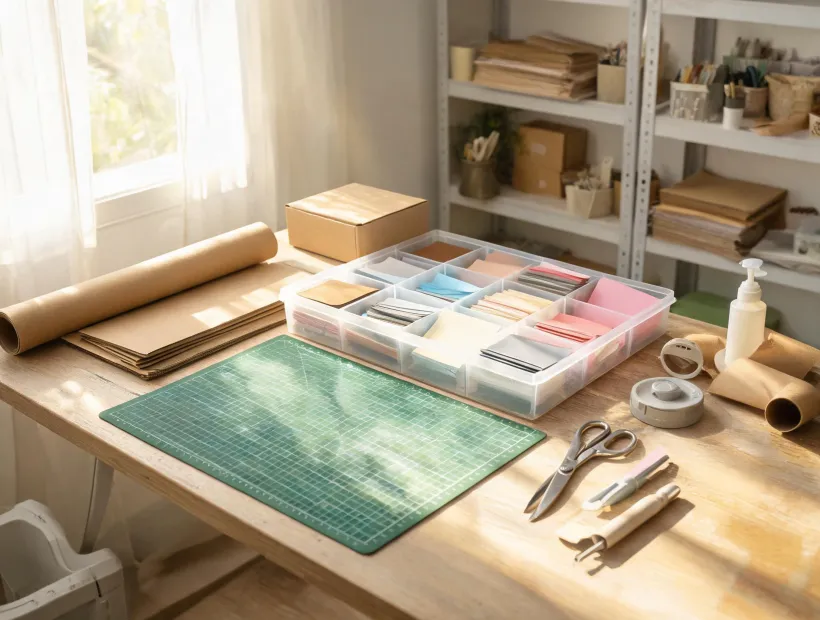
Our commitment is practical rather than decorative. We encourage makers to confirm material settings, use templates that reduce layout waste, select packaging that suits the gift instead of overpowering it, and save usable offcuts for labels, seals, tags, and small embellishments. That approach respects both the recipient and the maker's budget.
Personalized craft work has a different sustainability profile from mass merchandise. The useful gains come from avoiding the second and third failed sheet, choosing a material that matches the item's real use, and designing projects so small leftovers become intentional details. A cleaner workflow also reduces rushed shipping, duplicate purchasing, and the tendency to buy supplies that never fit a finished gift.
Use test cuts and material notes before committing premium cardstock, vinyl, sticker paper, or iron-on to a full batch.
Arrange tags, labels, seals, and small names so leftover areas can become secondary gift details instead of bin waste.
Choose recyclable wraps, simple inserts, and right-sized envelopes so the presentation supports the handmade item.
These markers help a maker group review behavior before the next batch starts. If the material note is missing, the same mistake may be repeated. If packaging is chosen last, the finished item can look overbuilt or underprotected. Recording the small decisions gives future projects a quieter, lower-waste start.
Send the project brief and we will help reduce avoidable material trials before you start cutting.